The Modern Café
This review was prepared by Anny of urban egg.
**********************************
In the space between a Michelin three-star restaurant and a neighborhood bistro, an artful coffee-table book and technical cooking manual, emerges The Modern Café by Francisco J. Migoya. Illustrated with sumptuous full page color photography by Ben Fink, this cookbook is a feast for the eyes.
Migoya, who teaches a class on Café Operations as part of the Baking and Pastry Arts Program at the Culinary Institute of America, delivers a comprehensive cookbook encompassing all the possible areas of a café’s various departments from baked goods and savory food to beverages and packaged retail items. In his book, however, his target audience is no longer the student gathering educational information, but professional chefs and pastry chefs who have the foundation to interpret the complex recipes and techniques he assumes as a prerequisite to using the book.
While most of the recipes and techniques are for an advanced cook, Migoya is still a teacher at heart, pausing once in a while to demonstrate, for example, how to shape the perfect croissant or cut the épi, with meticulously detailed instructions and accompanying photographs. He also provides anecdotal advice about equipment, tricks of the trade and failures from his years of personal experience as a professional pastry chef.
The Modern Café, as the title suggests, is a guide for operating a business that caters to the more informed, food-savvy consumers of today’s café. Thus, not all recipes are traditional. In fact, the majority of recipes require precise execution, and are the more refined and abstracted versions of their rustic, home-made forms. Tradition continues on where breads and laminated doughs are concerned—he does not tamper with these well-established classics.
The book is divided into five categories: The Bakery, The Pastry Shop, The Savory Kitchen, Beverages and The Retail Shelf. The Bakery chapter encompasses perhaps the most useful and versatile information of the book, as it covers the key ingredients of what is expected of a café and is the area that can potentially be a high-profit opportunity.

The Bakery is one chapter that even a novice can use and learn from: breakfast pastries, pound cakes, financiers and fundamentals of bread (e.g., brioche “mother” recipe, sourdough starters). For the advanced cook, there are also ideas for building upon the base, and creating delightful garnishes such as English toffee, chocolate croquant or dressing up a brioche bun with foie gras, rainier cherry and Sicilian pistachio.
If Migoya seems to stick to convention for The Bakery recipes, he deconstructs and abstracts and creates sculptural pieces for The Pastry Shop. It is apparent that this is the realm he thrives in, and his hand is strongly imprinted in the products shown here. As he forewarns, this is a much more labor-intensive area, requiring more time and skill than the bakery. The majority of the recipes are molded, layered cakes with a soft filling, a crunchy garnish, and covered with a coating of cocoa butter and chocolate, which is referred to as “velvet” or “velour.”
While the “velvet” is a beautiful way to cover a dessert, it is impractical and produces too much waste for a café business. The “velvet” is a mixture of cocoa butter with chocolate or a coloring or flavoring agent, which then gets spray painted onto the dessert. The aesthetic effect is an evenly speckled, impressive and texturally-interesting product. However, what it entails on a practical level is a disproportionate quantity of the “velvet” being sprayed onto the surrounding wall and surface, and going to waste.
Moreover, in order to spray paint the desserts, they must be sufficiently frozen first. Migoya extols the virtues of a blast freezer, which conveniently drops in temperature to negative digits in a matter of fifteen minutes, and his recipes—which involve pouring and freezing layer upon previously frozen layer of components in molds—implicitly require this piece of equipment. As he laments, the blast freezer takes up much space and has a five-digit price tag. This, too, may be unrealistic for a café which charges moderate prices and does not have a brigade of pastry assistants.
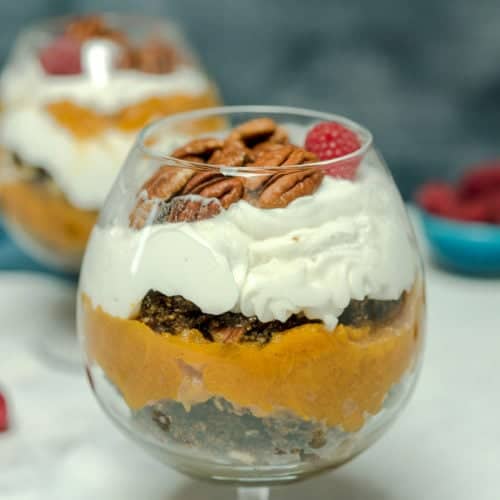
It is evident from the attractive photographs and the unique presentations of deconstructed desserts in glass containers and mason jars, that he is dedicated to his craft. Something called Lemongrass Panna Cotta with Bubble Tapioca and Fiji Tea is shown in a glass box half-filled with the gelatin-set panna cotta topped with a thin layer of brown tea-infused tapioca pearls, jabbed with a bold red plastic straw intended to be used for stirring and drinking the contents.
The quality of the flavors and components is noteworthy, and it is possible for the reader to reinterpret the composition to meet his or her personal needs and vision. For example, Migoya bakes a basic sablé dough tart shell, fills it with sweet rhubarb and raspberry compote. Then, he pours vanilla mascarpone into the tart shell, freezes and spray paints the entire tart with a coating of white chocolate “velvet,” then thaws the chocolate-covered tart and garnishes it before displaying it in the refrigerated case. The same mascarpone tart with rhubarb and raspberry compote may be enjoyed as is, rather than being enveloped in white chocolate spray, in any home or café kitchen without compromising the essence of the thing itself.

The Savory Kitchen section offers insightful points on preparing and storing food for service without compromising the quality of those dishes made hours in advance, while balancing others that have to be made to order in a race against time. The recipes for soups, salads, and sandwiches, though utilizing specialty products such as truffles, pork belly, fromage blanc and fleur de sel, are within the ability of a home cook to replicate. Classic sauces, such as gribiche, vinaigrettes and béchamel, can become staples in any kitchen, while dishes like foie gras torchon paired with McIntosh apple compote and warm brioche can appeal to today’s café goers. The instructions for the House-Cured Duck Ham were so descriptive that I was able to follow the procedures without any prior experience; however, the recipe did not specify the size of duck breast, and the amount of the salt rub prescribed would have been excessive for a small to average one.
The Beverages section instructs the reader on different brewing methods for coffee and tea, useful guidelines on choosing equipment and portioning appropriately for the various serving sizes available to the customer. Consistent with every recipe in the book, the ingredients are charted in both metric (grams/liters) and US customary units (ounces/pounds), and this is especially valuable for measuring and mixing the specialty cocktails in the Beer and Wine section of this chapter.

In The Retail Shelf, Migoya once again displays his aptitude for crafting exquisite products such as molded chocolates, elegant candy bars, and an assortment of pâte de fruit in a rainbow of colors and flavors. His fruit jams and jellies are especially luscious and well-balanced in sweetness and acidity, as numerous tests of the recipes have proven. This last chapter provides indispensable tips for packaging retail items, as well as ideas for special-occasion cakes and decorations.
This is one modern café I would like to see brought to life. Until then, we can savor the images and find inspiration in the impeccably composed recipes of Chef Migoya’s vision.


Great review! I love his blog, though it's a not a site I bake from, but rather one that I go to for inspiration. I'll have to check out this book, as I'd like a closer look at some of his recipes.